Alaçatı, Çeşme, İzmir, Turkey
2026-04-28 17:58:02
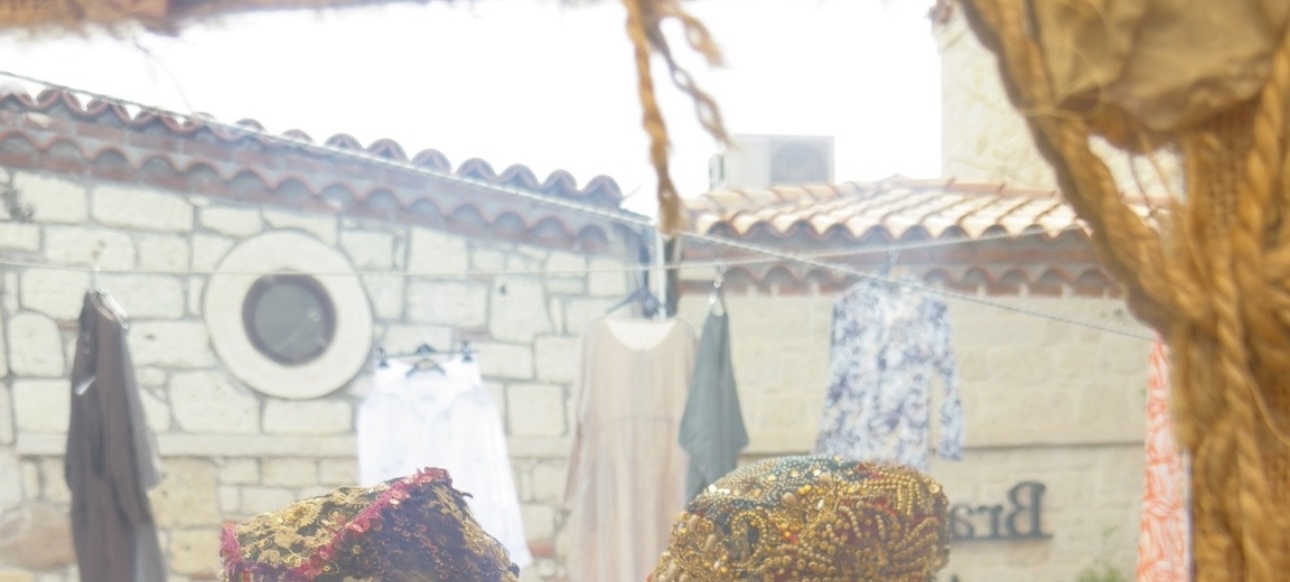
Primary guess
Primary guess: Alaçatı, Çeşme, İzmir, Turkey
Confidence
• Level: Medium
• Why:
- The architectural combination of light-colored, rustic ashlar masonry and red clay tile roofs is strongly indicative of the Aegean/Mediterranean region.
- The specific detail of the scalloped/wavy white plaster trim directly underneath the roof tiles is a highly distinctive hallmark of historical architecture in Alaçatı and the Çeşme peninsula.
- The presence of boutique clothing hanging outside a historic stone building matches the well-known tourist and shopping street vibe of Alaçatı.
- An exact pinpoint is not possible due to the heavily obscured foreground, blurry midground, and only a partial, unidentifiable sign visible in the background.
Visual evidence
• **Architecture - Stonework:** The buildings are constructed from light-colored, slightly irregular rectangular stone blocks. This is highly characteristic of "Alaçatı stone" (a local tuff rock) used extensively in the region.
• **Architecture - Roofs:** The roofs use traditional curved red clay tiles ("monk and nun" style). Crucially, the roofline features a decorative, scalloped white plaster edge where the roof meets the wall. This is a specific vernacular detail found almost exclusively in the historic Greek/Turkish houses of the Çeşme peninsula, particularly Alaçatı.
• **Architecture - Windows:** A prominent circular window with a thick white border is visible. While found elsewhere, renovated stone houses in Aegean tourist towns frequently feature these to break up the stonework.
• **Street Scene / Commercial Activity:** Clothing (dresses, shirts) is hanging on a line strung between buildings or across a stall. This indicates a pedestrian-friendly commercial area, likely a boutique shopping street or market catering to tourists.
• **Foreground Objects:** The out-of-focus objects in the foreground appear to be heavily beaded, ornate textiles or headwear (possibly traditional or tourist-oriented crafts), viewed through hanging ropes or tassels, suggesting the photo was taken from inside or just behind a market stall looking out.
• **Signage:** In the lower right background, a partial metal sign with serif lettering is visible. It appears to read "Bra..." or "sraB" depending on orientation. It is too blurry and incomplete to identify a specific business.
• **Modern Infrastructure:** An air conditioning compressor unit is visible on the roof, confirming this is a modernized, inhabited building, typical of heavily restored tourist towns.
Reasoning
The initial step is to analyze the architectural style, which is the clearest visual clue in the mid-to-background. The combination of rustic, light-colored block masonry and terracotta tiled roofs immediately places the location in the Mediterranean or Aegean basin.
However, to narrow it down from regions like southern Italy, Spain, or the Greek islands, we must look at specific vernacular details. The most defining feature in this image is the roofline. The white, wavy/scalloped plaster detailing directly beneath the roof tiles is a signature architectural element of the houses in the Çeşme peninsula of western Turkey, most famously preserved and replicated in the town of Alaçatı. While nearby Greek islands (like Chios) share similar stonework due to shared history, this specific scalloped eave treatment is overwhelmingly prevalent in Alaçatı's restored historic center.
Furthermore, the context supports this. Alaçatı is renowned as an upscale boutique tourist destination. The narrow streets are filled with stone buildings that have been converted into cafes, boutique hotels, and shops. The sight of stylish clothing hanging on lines outside these stone walls is a common daily scene in the town during the tourist season. The ornate, possibly handmade crafts in the blurry foreground further support the context of a tourist-oriented market or shop.
Alternative locations like Bodrum or Fethiye (also in Turkey) utilize stone, but their traditional vernacular leans more towards whitewashed walls or different roof structures (Bodrum is famous for flat roofs and white walls). The Greek islands are a strong secondary possibility, but the specific combination of that exact stonework and the scalloped roofline strongly favors the Turkish Aegean coast, specifically Alaçatı.
Because the sign ("...Bra...") is incomplete and the exact shop cannot be identified, confidence is capped at Medium, representing high certainty of the town/region, but an inability to provide a street-level coordinate.
Verification
• Searching Google Images for "Alaçatı stone houses architecture" yields countless images featuring the exact same masonry style and, importantly, the specific scalloped white roofline details seen in the photo.
• Searching for "Alaçatı street shopping" confirms the aesthetic of boutique clothing hung outside historic stone buildings.
Links
• Google Maps (Alaçatı general area): https://maps.app.goo.gl/3QW9c5J9uL9K8QkY9
• Wikipedia (Alaçatı architecture context): https://en.wikipedia.org/wiki/Ala%C3%A7at%C4%B1
Coordinates
38.2818, 26.3764
*(Note: These coordinates point to the center of the historic commercial district of Alaçatı. An exact coordinate is not possible because the specific shop cannot be identified from the partial sign and heavily obscured foreground, but the architectural evidence places it firmly within the streets of this specific town.)*