Brazil
2026-07-26 03:59:25
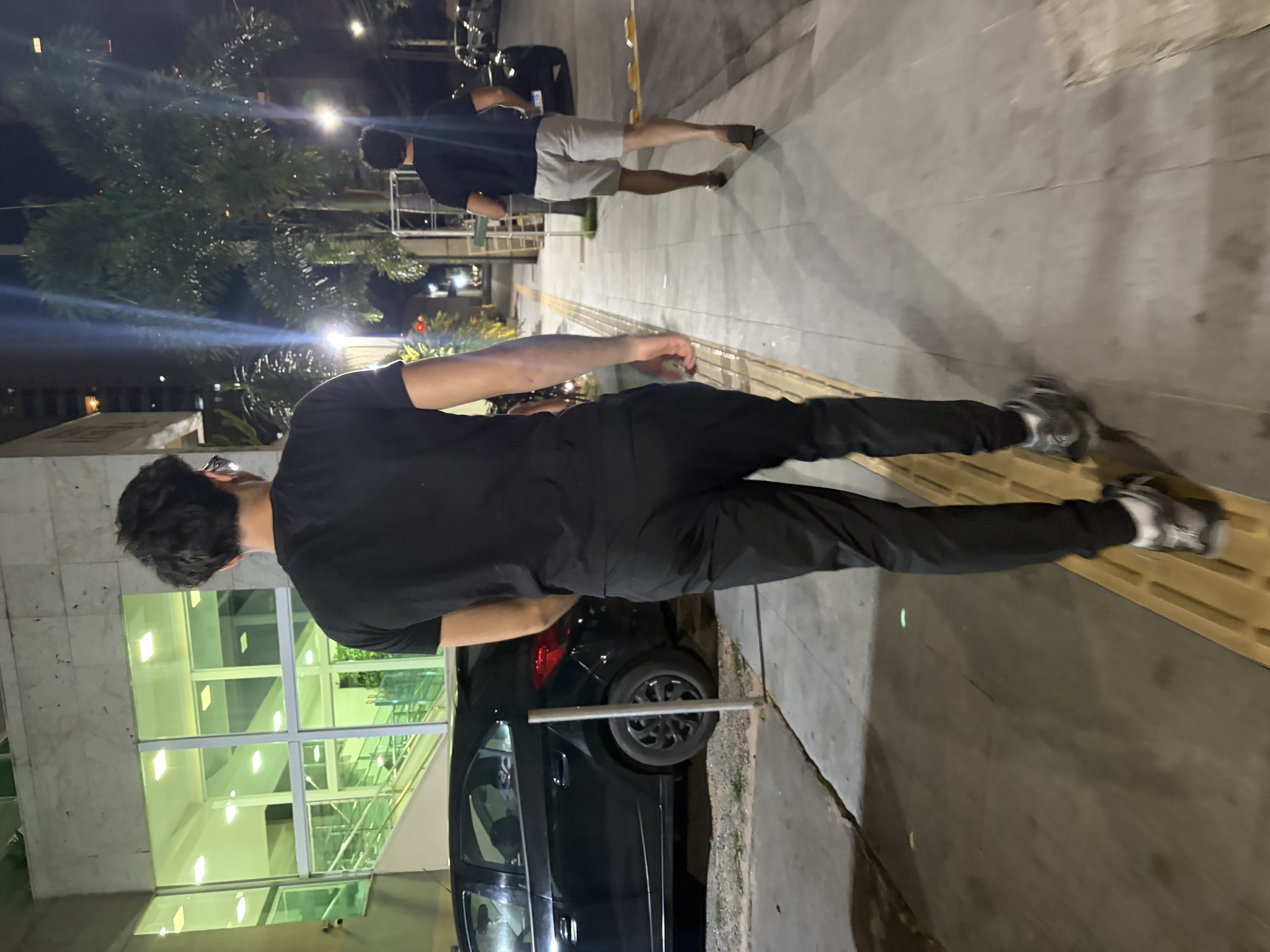
Primary guess
Brazil
Confidence
• Level: High
• Why:
- The most distinctive clue is the yellow tactile paving strip (directional indicator) on the sidewalk, which is standard in Brazil for accessibility according to NBR 9050/16537 standards.
- The architectural style of the building (white/light-colored, modern, glass facade) combined with the urban street scene is highly characteristic of modern residential or commercial zones in many Brazilian cities.
- The climate and vegetation (palm trees in an urban setting at night) are typical of tropical/subtropical Brazil.
- The presence of street-side parking and the general layout of the sidewalk align with typical urban planning in Brazil.
Visual evidence
* **Tactile Paving:** The yellow, textured longitudinal strip on the sidewalk is a hallmark of accessibility standards in Brazil (often referred to as *piso tátil*), used to guide visually impaired pedestrians.
* **Vegetation:** A tall palm tree is visible on the right, which is consistent with the urban landscape of many Brazilian coastal or inland cities.
* **Building Architecture:** The building on the left has a clean, white concrete/stucco facade with modern glass panels and lighting, common in contemporary Brazilian architecture.
* **Street Environment:** The scene shows typical urban infrastructure—sidewalks, street lighting, and parallel parking—common in residential or mixed-use neighborhoods in Brazil.
* **Lighting:** The warm yellow ambient lighting reflecting on the building and sidewalk is typical for nighttime urban environments in Brazilian metropolitan areas.
Reasoning
The combination of the specific yellow tactile paving design, the architectural aesthetic of the building, and the tropical vegetation strongly points to Brazil. Tactile paving is a regulatory requirement in Brazil for new sidewalk construction, and while it exists in other countries, the specific style (longitudinal directional bars in bright yellow) is ubiquitous across Brazilian cities. The image lacks specific signage or unique landmark details to narrow it down to a specific city (e.g., Rio de Janeiro, São Paulo, Curitiba), but the overall "vibe" and urban furniture are consistent with mid-to-large Brazilian cities. Other locations, such as Japan (where tactile paving originated) or parts of Europe, are less likely because their architectural and sidewalk paving patterns typically differ significantly from the specific concrete-and-tile style shown here.
Verification
* NBR 9050/16537 standards define the requirements for tactile paving in Brazil.
* General information on urban mobility and accessibility in Brazil supports the widespread use of these specific tactile indicators in public spaces.
Links
* Research on Brazilian sidewalk accessibility
Coordinates
Not possible; the image lacks specific street signs, business names, or unique landmarks necessary for precise geolocation.