Eastern Europe (likely Ukraine, Russia, or Belarus)
2026-06-07 21:13:17
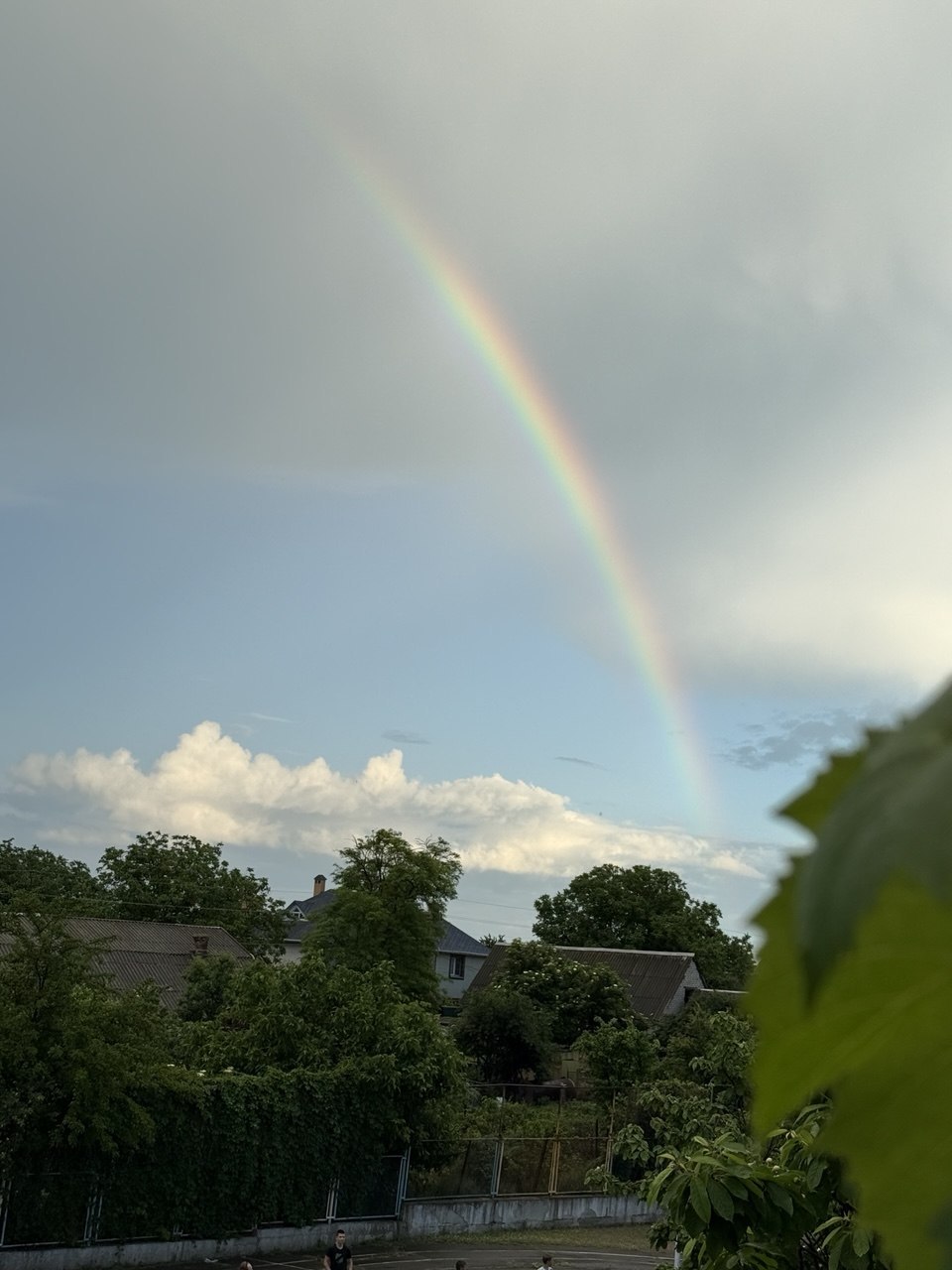
Primary guess
Primary guess: Eastern Europe (likely Ukraine, Russia, or Belarus)
Confidence
• Level: Low
• Why:
* The image shows generic rural or suburban residential architecture common across large parts of Eastern Europe and the former Soviet Union.
* There are no unique landmarks, street signs, license plates, or specific geographic markers to narrow it down to a specific town or city.
* The architecture (hipped-roof houses, corrugated metal/shingle roofing, and foliage) is widely distributed, making it impossible to distinguish between several neighboring countries.
Visual evidence
* **Architecture:** The buildings feature typical, modest residential construction with hipped or gabled roofs often covered in corrugated metal or fiber cement sheeting, common in post-Soviet residential development.
* **Vegetation:** The mix of deciduous trees and dense green shrubbery (including what appears to be a grapevine or similar climbing plant in the foreground) is characteristic of a temperate climate zone, consistent with Eastern Europe in the summer.
* **Infrastructure:** The simple, functional concrete-base fence and the appearance of a paved surface (likely an asphalt path or road) at the bottom of the frame are typical of residential areas in this region.
* **Climate:** The presence of a rainbow following rain is a common atmospheric phenomenon, but it does not provide location-specific data.
* **Absence of Clues:** There are no visible road signs, business names, vehicle license plates, or unique architectural details (such as specific regional decorative carvings or distinct building styles) that would provide a precise geographic anchor.
Reasoning
The visual elements in the photo—specifically the combination of housing materials, roof styles, and general foliage—strongly point to a residential setting in Eastern Europe. This style of construction is ubiquitous across Russia, Ukraine, and Belarus.
Because residential architecture in these countries often follows standardized or vernacular patterns developed during the mid-to-late 20th century, the houses seen here do not possess unique identifiers that would differentiate them from thousands of other similar neighborhoods. Without additional context such as metadata, local signage, or recognizable landmarks, geolocating this to a specific village or city is not possible with high accuracy. Other locations with similar climates and building styles (such as parts of Central Europe or rural sections of the Baltics) are possible, but the specific combination of roof materials and fence style most strongly aligns with the common residential aesthetic of East Slavic regions.
Verification
* A reverse image search yields stock imagery of "Russian village houses," "Ukrainian rural architecture," and "Eastern European residential landscapes," confirming that this scene is a generic representation of the region rather than a unique, identifiable landmark.
* No specific geographic markers were detected upon analysis of the buildings or surrounding features.
Links
* Typical Russian Wooden House Architecture (Wikipedia)
* Earth Architecture in Ukraine
Coordinates
Not possible to provide accurate coordinates as the location is a generic residential area that could exist in thousands of different places across Eastern Europe.