Guanajuato, Mexico
2026-06-30 21:52:59
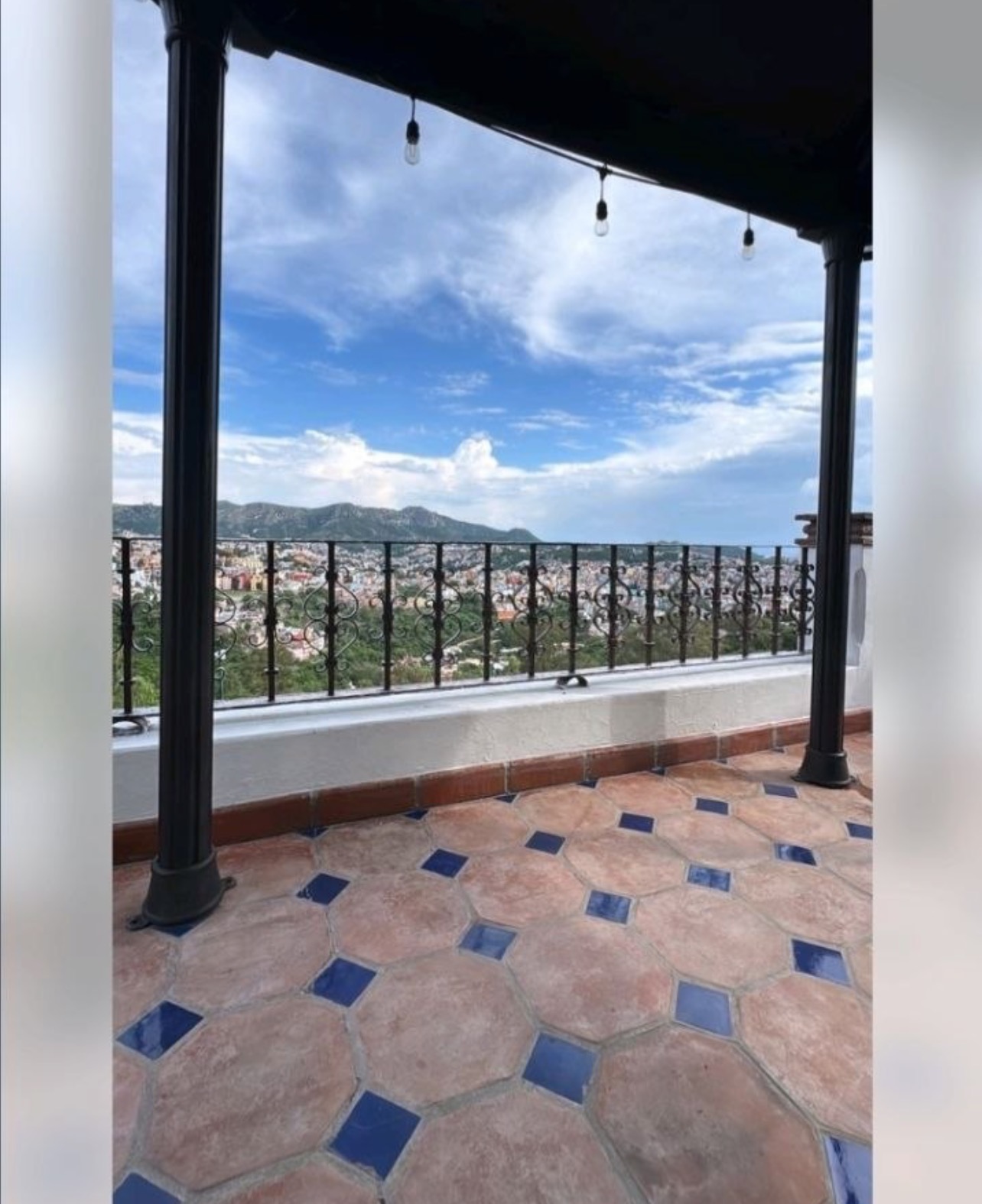
Primary guess
Guanajuato, Mexico
Confidence
• Level: Medium
• Why:
- The architectural style—specifically the terracotta tile flooring with blue geometric inlays and the wrought iron railing—is highly characteristic of colonial-style architecture in Mexican cities like Guanajuato, San Miguel de Allende, and Puebla.
- The dense cityscape in the background, featuring buildings with varying heights, colors, and terracotta roofs nestled against hills, is a classic visual identifier of Guanajuato’s topography.
- The combination of the "Mexican Colonial" aesthetic (ironwork, clay tiles, Talavera-style blue accents) and the hilly urban landscape strongly points to the Bajío region of central Mexico.
Visual evidence
• **Terracotta flooring with blue inlays:** This is a hallmark of traditional Mexican interior/exterior design, often using hand-painted ceramic tiles (Talavera style) or pigmented concrete to add decorative contrast to clay tiles.
• **Wrought iron railing:** The ornate, scrolling design of the railing is typical of colonial-era balconies and terraces throughout Mexico, often found in historic city centers.
• **Urban Landscape:** The background shows a dense, sloping city with red/terracotta tiled roofs, typical of historic Mexican cities built on uneven, mountainous terrain.
• **Climate/Lighting:** The clear blue sky and bright, directional sunlight suggest a high-altitude, sunny climate typical of central Mexico (like the Mexican Plateau).
• **Decor:** The hanging Edison-style string lights are a common modern addition to terraces and rooftop restaurants in tourist-frequented historic districts.
Reasoning
The visual combination of terracotta and blue ceramic tile patterns, combined with the specific wrought-iron railing style and the hilly, red-roofed urban backdrop, is strongly indicative of a Mexican colonial city. While cities like Puebla, San Miguel de Allende, and Mexico City feature similar architectural elements (especially the use of Talavera tiles), the specific "bowl-shaped" or hilly city view seen in the background is most iconic to Guanajuato. Other regions like the Mediterranean or Portugal also use terracotta and blue tiles, but the specific combination of this ironwork and the "canyon-like" density of the hillside city in the background is distinctively Mexican.
Verification
* **Search for similar architectural styles:** The use of "talavera-style" blue-and-white tile accents and terracotta floors is widely documented in Mexican colonial architecture.
* **Topographic Match:** The "mountainous" background view is a key differentiator. Guanajuato is famously built into a narrow, winding valley, which matches the perspective of looking out over a dense, hilly urban area.
Links
* Guanajuato City Tourism (Official)
Coordinates
* Approximate: 21.0190° N, 101.2574° W (Guanajuato City center)