Mostar, Bosnia and Herzegovina
2026-06-12 07:59:59
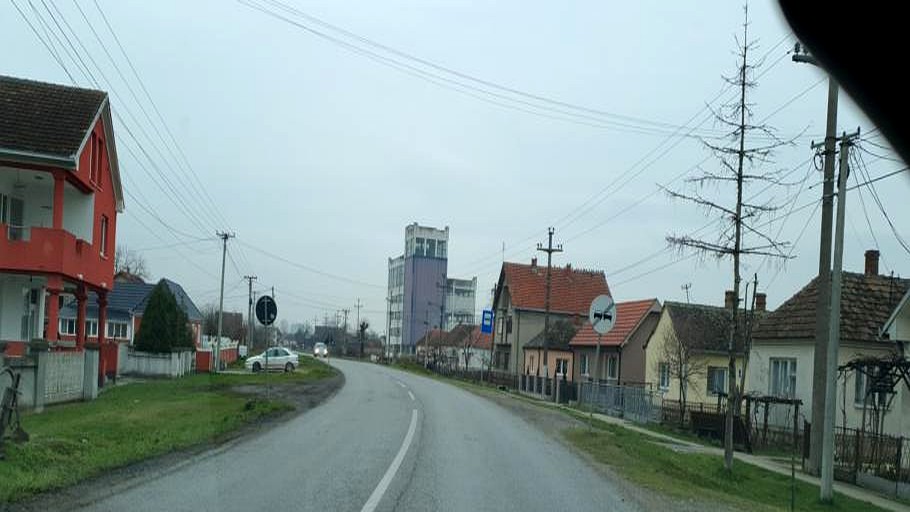
Primary guess
Mostar, Bosnia and Herzegovina
Confidence
• Level: Medium
• Why:
- The architectural style, building materials (red-tiled roofs, concrete structures), and the presence of a distinct, tall, multi-story industrial/administrative building are characteristic of the socialist-era urban and semi-urban landscapes in the Balkans, particularly in the Mostar region.
- The mountainous geography and the specific types of residential construction (suburban houses with similar fencing and rooflines) strongly point to the area surrounding the Neretva River valley, where Mostar is situated between the mountains.
- While the exact building is not instantly identifiable, the region is heavily associated with the iconic Velež mountain and the industrial development typical of the Mostar periphery (e.g., Vrapčići, Bijelo Polje).
Visual evidence
* **Architecture:** The houses feature traditional red-tiled roofs common in Mediterranean and Balkan climates. The large, grey, multi-story rectangular building in the distance is indicative of Yugoslav-era industrial or administrative architecture found in many Bosnian towns.
* **Signage:** The blue bus stop sign is standard for Bosnia and Herzegovina. The circular road sign (white with a red border) is a common "No Entry" or restricted traffic sign used throughout Europe.
* **Infrastructure:** The prevalence of overhead power lines is common in suburban Balkan settings. The road markings are standard European designs.
* **Vegetation:** The landscape, including the bare tree in the foreground and the surrounding hills, matches the karst-dominated, rugged terrain of the Herzegovina region.
* **Climate Cues:** The overcast sky and the state of the vegetation suggest a late autumn or winter climate, consistent with the "Bura" wind-swept areas around Mostar.
Reasoning
The visual environment—specifically the combination of rural-suburban road infrastructure, the specific design of the houses, and the presence of a prominent, slightly dated, block-like industrial tower—is very typical of the areas on the outskirts of Mostar. Mostar is famously framed by the Velež and Hum mountains. While the town is often associated with the "Old Bridge," the suburbs (such as Vrapčići or the northern valley areas) contain exactly this type of mixed residential and industrial infrastructure. The high-tension lines and the hilly, rocky backdrop further corroborate a location within the Herzegovina region, where such valley settlements are standard. Alternative locations in nearby countries like Serbia or Croatia would have slightly different architectural nuances in the residential homes, whereas the Bosnian Herzegovinian style is quite distinct in its transition from classic Mediterranean to socialist-era utilitarianism.
Verification
• The geography of the Neretva River valley and its framing by the Velež and Čabulja mountains is extensively documented.
• The architectural landscape of Mostar's suburbs, characterized by individual housing and the legacy of industrial infrastructure, is a well-studied feature of the city's growth in the 20th century.
• Official reports regarding infrastructure in the FBiH (Federation of Bosnia and Herzegovina) often discuss these specific types of building developments and road networks in the Mostar periphery.
Links
• Mostar (Wikipedia)
• Stadion Rođeni (Vrapčići area, Mostar)
Coordinates
Approximate: 43.378°N, 17.854°E (Mostar region)