New Zealand suburban residential street
2026-07-30 12:50:28
Primary guess
New Zealand suburban residential street
Confidence
• Level: Low
• Why:
- The architectural style of the house (a mix of red brick, modern siding, and a hipped or gable roof profile) is common in New Zealand suburbs built between the 1990s and 2010s.
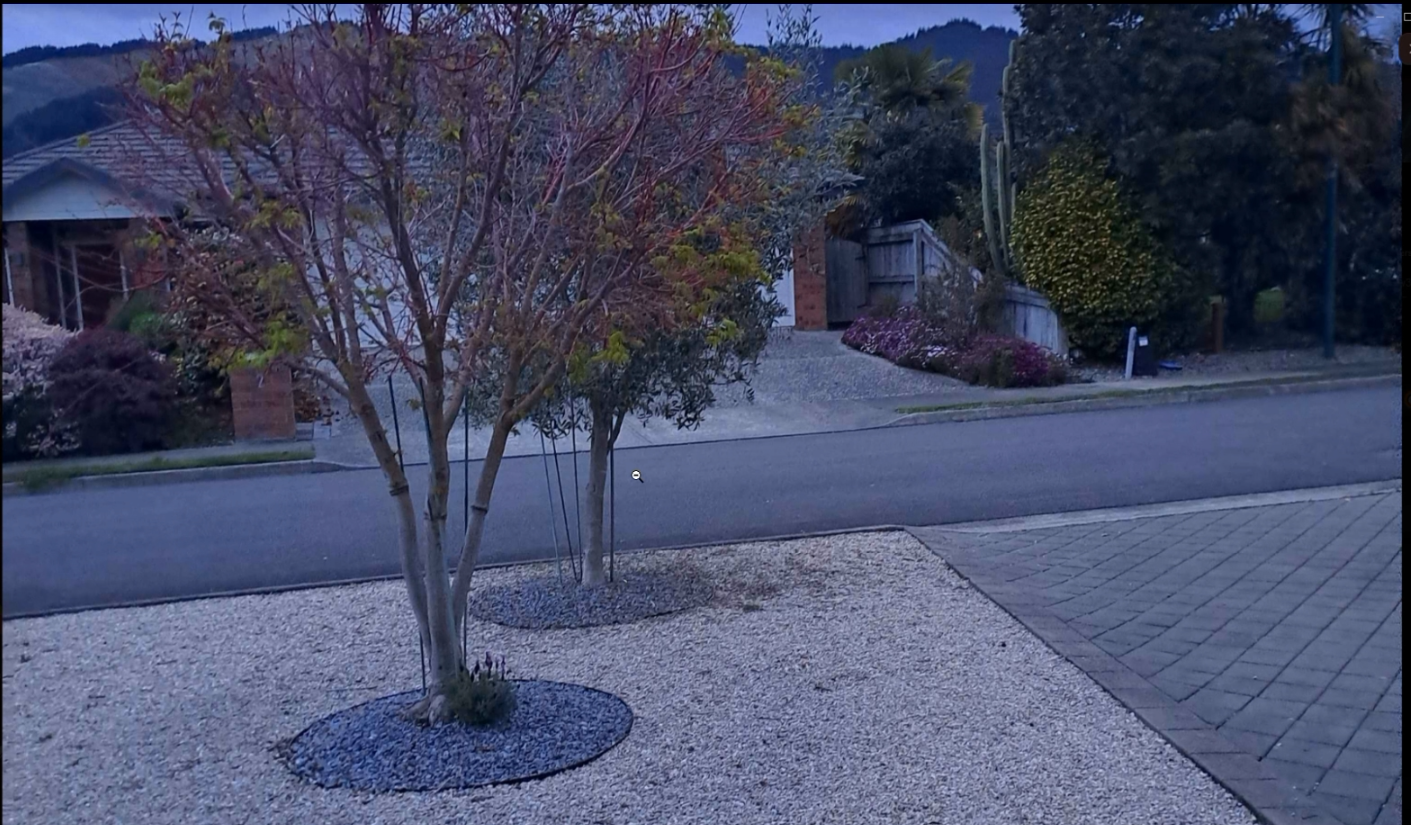
- The use of decorative gravel as a ground cover for street-side garden beds is a hallmark of New Zealand landscaping, particularly in regions where drought-tolerant or low-maintenance plants are favored.
- Olive trees (*Olea europaea*) are frequently planted in New Zealand residential gardens for their aesthetic appeal, "Mediterranean" look, and resilience to local conditions.
- The "number 2" signage on the brick pillar is consistent with standard New Zealand property identification.
Visual evidence
* **Vegetation:** The olive trees (*Olea europaea*) are a strong indicator of a temperate climate like New Zealand's, where they are popularly used as ornamental landscape trees.
* **Landscaping:** The circular borders of grey river stone or similar decorative gravel around the base of the trees and the use of similar gravel for the driveway are very common in modern Kiwi residential developments.
* **Architecture:** The house features a combination of red brick construction (often seen in 1990s–2000s New Zealand homes) and lighter-colored siding, which is a classic suburban aesthetic.
* **Road/Environment:** The quiet, paved suburban street, the presence of mountain/hill silhouettes in the background, and the overall "twilight" lighting are characteristic of a peaceful, hilly residential area, likely in a region like the upper South Island or parts of the North Island.
Reasoning
The visual cues—specifically the combination of the red brick, grey-toned gravel, and olive trees—strongly suggest a residential setting in New Zealand. These elements are frequently documented in New Zealand landscaping guides and architectural trends for suburban "lifestyle" or modern housing developments. While similar architecture exists in the UK or Australia, the specific combination of the "number 2" pillar design, the specific type of aggregate gravel, and the popularity of olive trees as a "structural" landscaping choice points heavily toward New Zealand. The mountains in the background further support the likelihood of a New Zealand location, as many towns there are nestled in hilly or mountainous terrain.
However, because this is a standard suburban scene without unique landmarks (like a specific street sign, distinctive utility pole, or unique mountain profile), it is impossible to pin down the exact address without more context. Thousands of similar homes exist in subdivisions across the country.
Verification
* **Olive Trees in NZ:** Various gardening and nursery sites (e.g., Leafland Nursery, The Plant Store) confirm the widespread popularity of olive trees in New Zealand for driveway and garden framing.
* **Landscape Trends:** Residential landscaping practices, including the use of gravel borders for street appeal, are widely discussed in New Zealand home improvement resources (e.g., Fence and Gate Auckland).
Links
• Leafland Nursery - Olive Trees in NZ
• Fence and Gate Auckland - Driveway Ideas
Coordinates
• Not possible: The photo lacks specific geolocatable signage or distinct landscape features that would allow for an exact coordinate match.