Philippines
2026-06-05 14:19:01
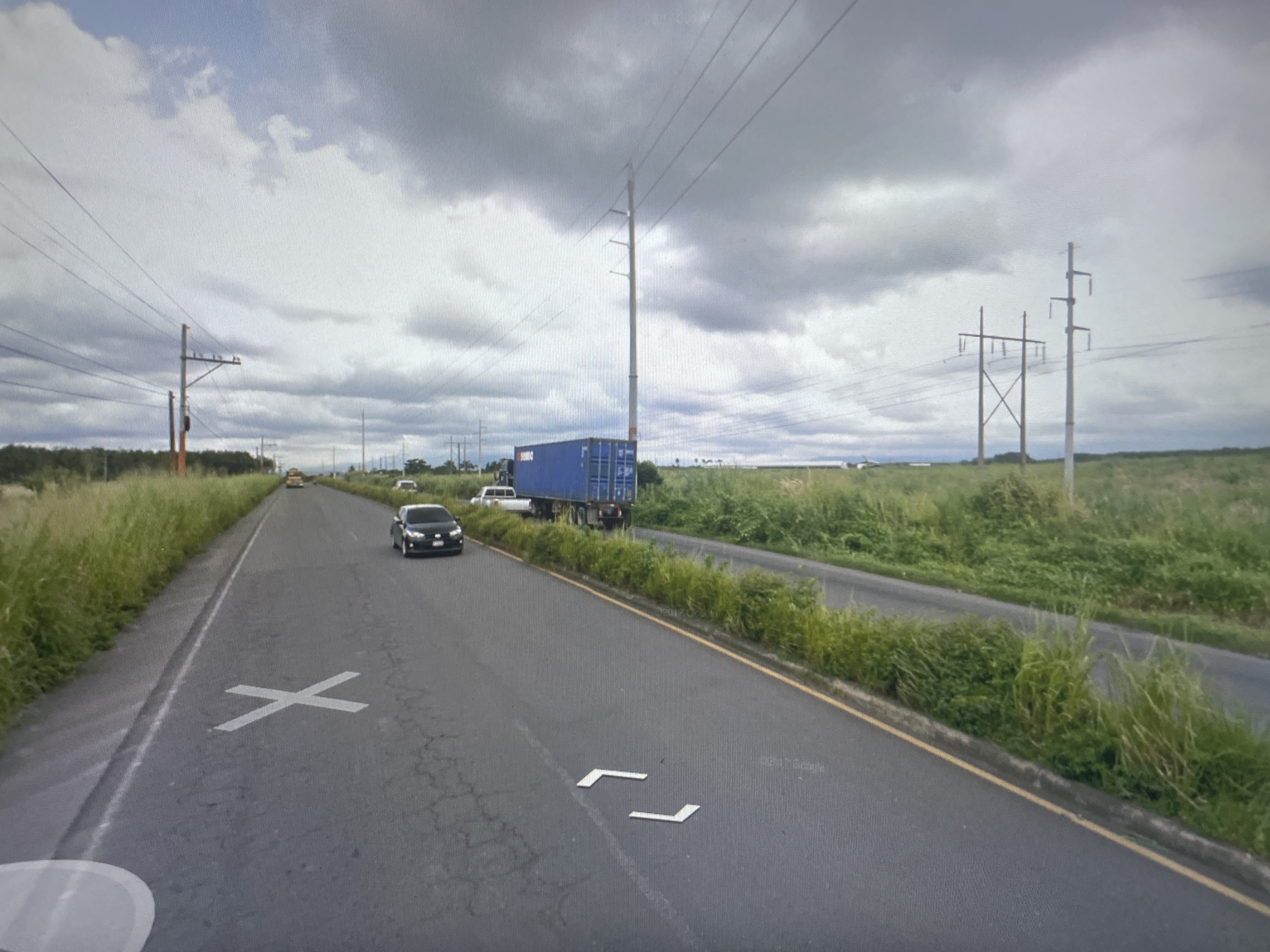
Primary guess
Philippines
Confidence
• Level: Medium
• Why:
- The pavement marking (a white "X" on the road) is a specific design used in the Philippines to mark "Do Not Block" intersections or, in some contexts, as an approach warning.
- The general aesthetic—overcast tropical sky, lush roadside vegetation, and specific power pole styles—strongly aligns with rural or provincial highways in the Philippines.
- The presence of a "blue shipping container" on a truck is common in logistics corridors, particularly on highways leading to major Philippine ports.
- While the road itself does not have a unique identifier visible, the combination of these features is highly characteristic of the Philippine national road network.
Visual evidence
* **Road Markings:** The prominent white "X" on the road is a characteristic pavement marking found in the Philippines, often used to warn drivers of an upcoming intersection, hazard, or "Do Not Block" zone.
* **Power Infrastructure:** The tall, slender concrete utility poles with multi-tiered cross-arms are standard for electrical distribution in many parts of the Philippines.
* **Environment:** The landscape, characterized by dense, overgrown green grasses and tropical shrubs along the roadside, indicates a humid, tropical climate.
* **Vehicles:** A semi-truck carrying a standard blue shipping container is a ubiquitous sight on major Philippine highways (such as the Maharlika Highway or other numbered national routes), which connect industrial areas and ports.
Reasoning
The visual evidence points strongly toward the Philippines. The "X" marking is a key indicator, as it is widely documented in Philippine traffic engineering manuals and driving guidelines to denote specific intersection rules. The overall scene—a rural highway with overhead high-voltage power lines and a shipping container truck—is typical of the infrastructure found in many provinces across the Philippines, where national roads often traverse wide, open, green fields. While this style of road could theoretically exist in other parts of Southeast Asia, the specific style of the "X" and the general road environment make the Philippines the most likely location.
Verification
* **Department of Public Works and Highways (DPWH) Guidelines:** Road markings, including the "X" (often part of a yellow box or intersection warning), are governed by DPWH standards.
* **Philippine Highway Network:** The layout is consistent with national routes in the Philippines.
Links
* Philippine Highway Network (Wikipedia)
* Road Signs and Markings in the Philippines (Department of Public Works and Highways)
Coordinates
Approximate coordinates are not possible because the photo does not contain enough unique geographic identifiers (like specific signage, mountains, or recognizable buildings) to pinpoint a single location on the extensive Philippine road network.