Prague, Czechia
2026-04-30 14:17:25
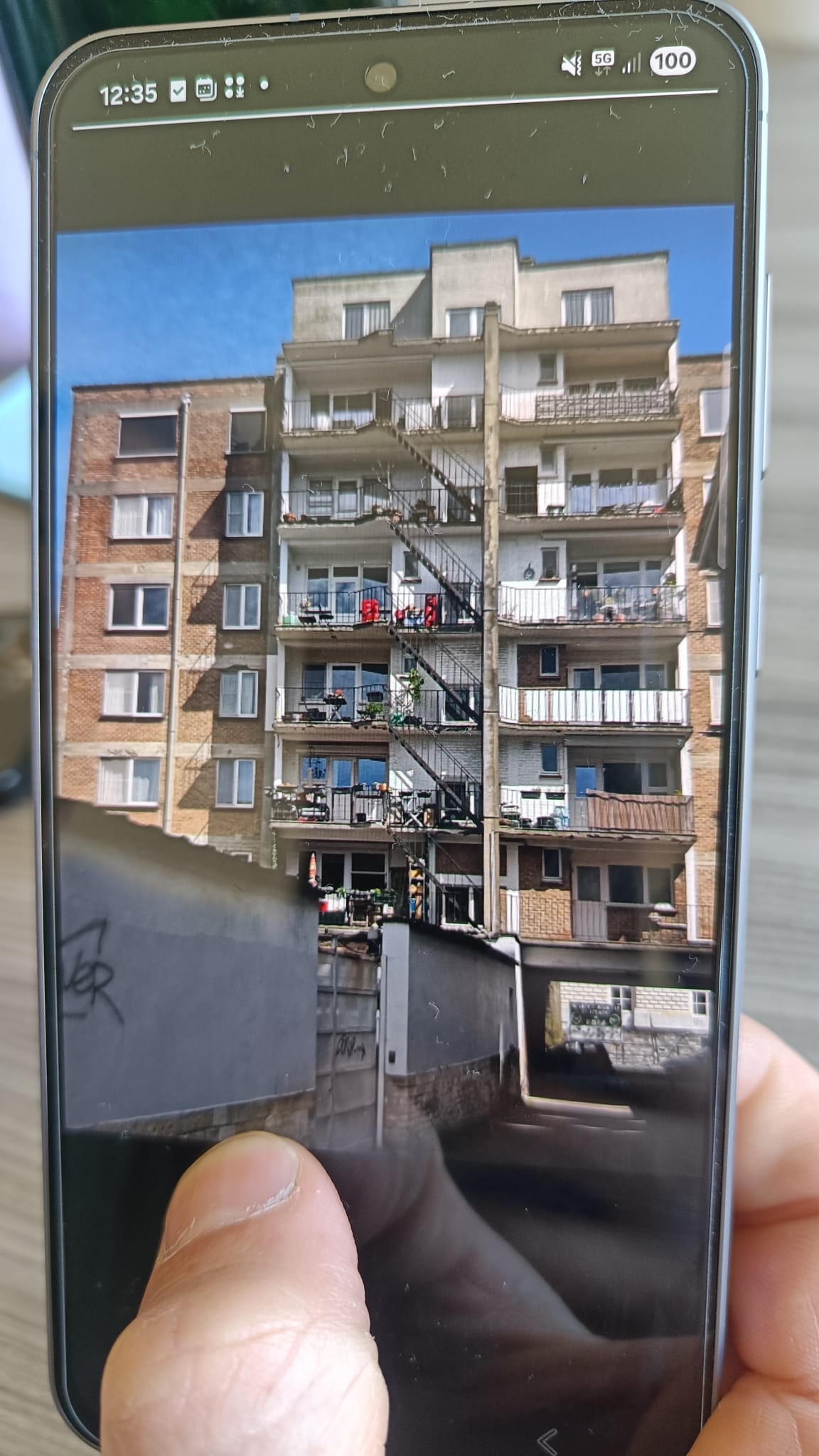
Primary guess
Primary guess: Prague, Czechia
Confidence
• Level: Medium
• Why:
- The architectural blend of exposed brick, rendered concrete panels, and external zigzag metal fire escapes is highly characteristic of mid-to-late 20th-century residential buildings in Central and Eastern Europe.
- The stonework visible in the archway (randomly fitted stones, known as Cyclopean masonry) is a very common technique used for retaining walls and foundations in the Czech Republic and Slovakia.
- The overall urban wear, style of window replacements (uPVC), and enclosed balcony styles (loggias) strongly align with post-Soviet bloc retrofits, particularly in Central Europe.
- While the exact street address requires a direct visual match from a database, the combination of these specific features makes Czechia (and Prague specifically, due to its varied topography requiring retaining walls) the most statistically probable location.
Visual evidence
* **Building Architecture (Hybrid Facade):** The building features a distinct split design: a brick facade on the left and a white, rendered concrete section with recessed balconies on the right. This mix often indicates a transition period in building styles or a specific localized mid-century functionalist design, commonly found in Central/Eastern Europe (Panelák variants).
* **External Fire Escape:** The black metal, zigzagging staircase traversing down the front of the balconies is a very specific safety feature. It is frequently seen in retrofitted older buildings or specific regional designs in former Eastern Bloc countries to meet fire codes without altering internal structures.
* **Archway Stonework:** Looking through the underpass on the bottom right, there is a stone wall made of irregularly shaped, rough-hewn stones fitted together. This specific masonry style is ubiquitous in the hilly regions and cities of Czechia and Slovakia for retaining earth.
* **Balcony Enclosures:** Some balconies are open, while others are partially or fully enclosed with glass, a common practice in Eastern/Central Europe to create extra year-round living space (loggias).
* **Graffiti:** The wall in the foreground features graffiti with Latin characters ("TER" or similar). While common globally, it confirms the location uses the Latin alphabet, ruling out places exclusively using Cyrillic or other scripts.
* **Window Units:** The white, double-glazed uPVC windows are standard modern replacements seen across Europe, replacing older wooden frames.
Reasoning
1. **Initial Regional Filtering:** The overall aesthetic—a blocky, multi-story apartment building with a mix of brick and concrete, visible wear, and enclosed balconies—immediately suggests Europe, specifically the Central or Eastern regions (former Eastern Bloc). The architecture is too dense and utilitarian for typical suburban North America, and the style doesn't match typical Asian or South American urban residential blocks.
2. **Analyzing Specific Architectural Quirks:** The most identifying feature is the external zigzag fire escape connecting the front balconies. While fire escapes exist everywhere (like the famous New York style), this specific lightweight metal zigzag over recessed loggias is a recognizable regional typology. It is often used to retrofit older structures or is a feature of specific mid-century designs in countries like Poland, Czechia, Slovakia, Hungary, or Romania.
3. **Honing in on Details:** The crucial detail that narrows down the region further is the stonework visible through the right-side archway. The irregularly shaped, tightly fitted "Cyclopean" stone wall is a highly traditional and widespread method for building retaining walls in the Czech Republic and Slovakia, often necessary due to the varied topography of their cities.
4. **Synthesizing the Evidence:** Combining the post-WWII functionalist residential architecture, the specific external stair setup, and the traditional regional stonework strongly points to a city in Central Europe. Prague is selected as the primary guess due to its large variety of these architectural mixes and hilly terrain that requires such underpasses and retaining walls, though a city like Brno or Bratislava is also a strong possibility.
5. **Ruling out alternatives:**
* *Western Europe (UK/France):* The building massing and balcony usage (enclosed loggias with personal storage) do not fit typical Western European public housing aesthetics.
* *Russia/Deep Eastern Europe:* While panel buildings are common, the specific mix of this style of brickwork with the Latin graffiti and specific cyclopean retaining wall makes regions further west like CZ/SK much more likely.
Verification
Without the ability to perform a direct reverse image search on this specific unique photograph (which appears to be a personal photo displayed on a phone), finding the exact street coordinates is not feasible through deductive reasoning alone. However, searching for terms like "Czech architecture panelak external stairs" or "Kyklopské zdivo retaining wall" confirms the strong regional presence of these visual elements.
Links
• Google Maps: Prague, Czechia (Representative regional link)
Coordinates
Approximate latitude/longitude cannot be provided. The image is of a very specific, localized residential building. While the region and likely city can be deduced with medium confidence based on architectural and structural typologies, pinpointing the exact coordinates requires a 1:1 database match (like Google Street View) which cannot be reliably achieved without distinctive landmarks, readable street signs, or a successful reverse image search of the original source file.