Rural road in Mexico
2026-06-05 14:17:46
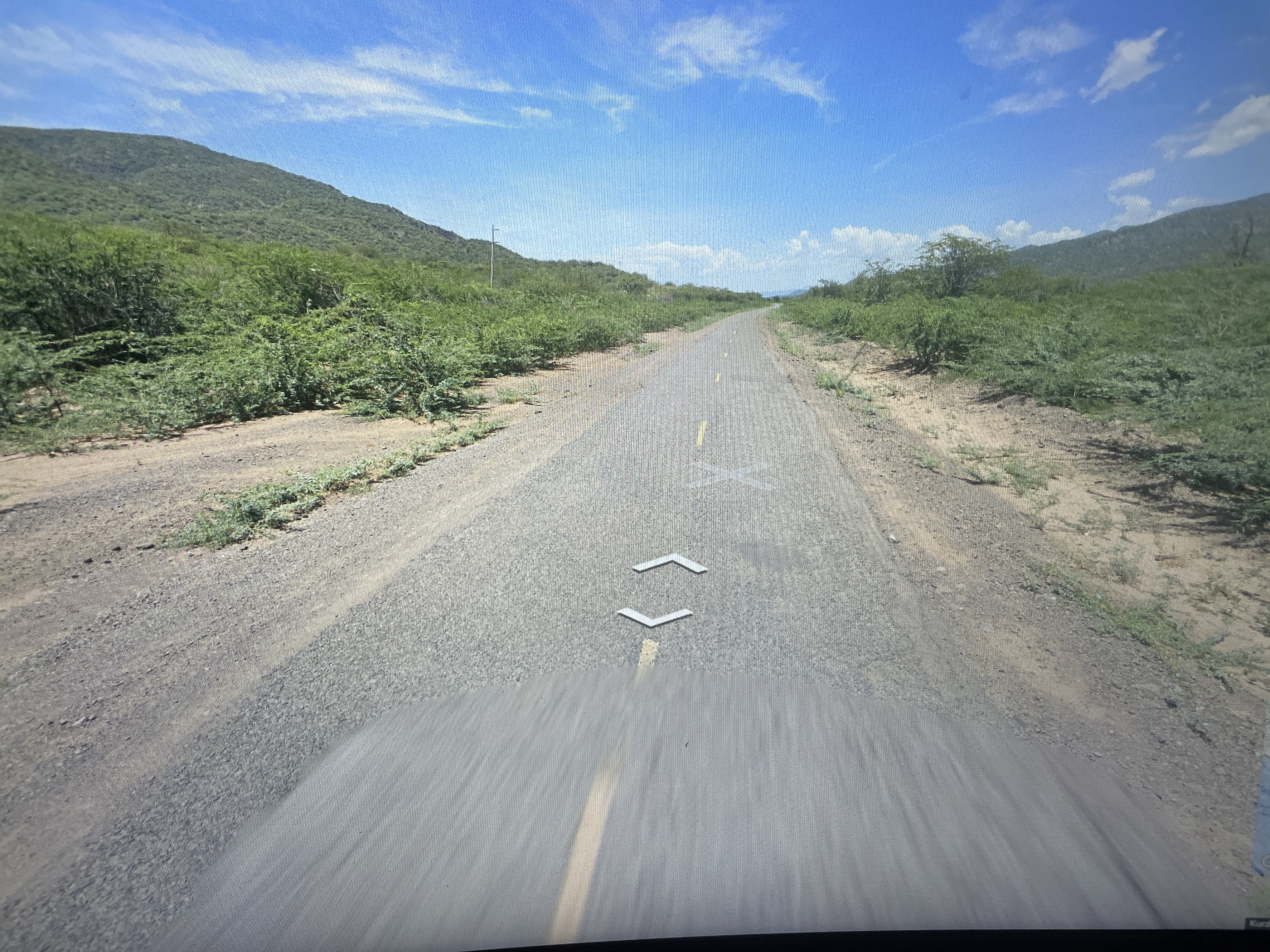
Primary guess
Rural road in Mexico
Confidence
• Level: Medium
• Why:
- The combination of the specific, weathered yellow center line and the surrounding dry, thorny shrubland (likely tropical dry forest) is highly characteristic of rural Mexico.
- The road navigation interface (the white chevrons) is standard for Google Street View, which has extensive coverage across Mexican rural road networks.
- The landscape—characterized by hilly, arid terrain and sparse, scrubby vegetation—is consistent with regions such as those found in central or western Mexico (e.g., Michoacán or Jalisco).
Visual evidence
• **Road Markings:** The yellow center line, which appears somewhat faded and dashed, is a standard marking style in many countries, including Mexico, where yellow is used to separate opposing traffic.
• **Vegetation:** The landscape consists of low, thorny shrubs and trees characteristic of tropical dry forests. This type of vegetation is common in many parts of Mexico, particularly in rural zones away from the immediate coast or high mountains.
• **Topography:** The background shows rolling hills with a similar arid, brush-covered appearance, reinforcing the tropical dry forest or scrubland classification.
• **Climate Cues:** The clear, bright blue sky and harsh shadows indicate a sunny, dry climate, consistent with much of Mexico's geography during the dry season.
• **Infrastructure:** The simple, narrow asphalt road without heavy barriers or extensive shoulder markings is typical for rural secondary or tertiary roads in Mexico.
Reasoning
The visual characteristics of the environment—specifically the arid, shrubby vegetation and the topography—point strongly toward a Latin American setting. Mexico is the most likely candidate given the extensive rural Street View coverage and the consistency of the road markings with Mexican standards.
Other regions were considered but are less likely:
• **India:** While some regions have similar vegetation, the road markings and the specific style of the Google Street View interface imagery (the way the road textures and horizon appear) are less commonly associated with the typical rural Indian Google Street View aesthetic.
• **Malaysia:** While "Kuar" appears in Malaysian location searches, the landscape in the photo is far too arid and hilly compared to the typical flat, lush, or tropical environments of rural Kedah.
• **Argentina:** While a restaurant named "Kuar" exists in Ushuaia, the landscape there is sub-Antarctic (mountains, glaciers, cold forests), which bears no resemblance to the warm, arid, thorny shrubland in the photo.
Verification
• Road marking conventions: Standardized road marking systems in North America and beyond
• Tropical Dry Forest distribution: Global distribution of tropical dry forest
Links
• Google Maps (Example of rural Mexico road)
Coordinates
Approximate coordinates cannot be determined with certainty due to the lack of unique landmarks, signage, or urban features; the photo represents a generic rural environment in a region like central/western Mexico.