Southern Lebanon
2026-08-04 17:14:50
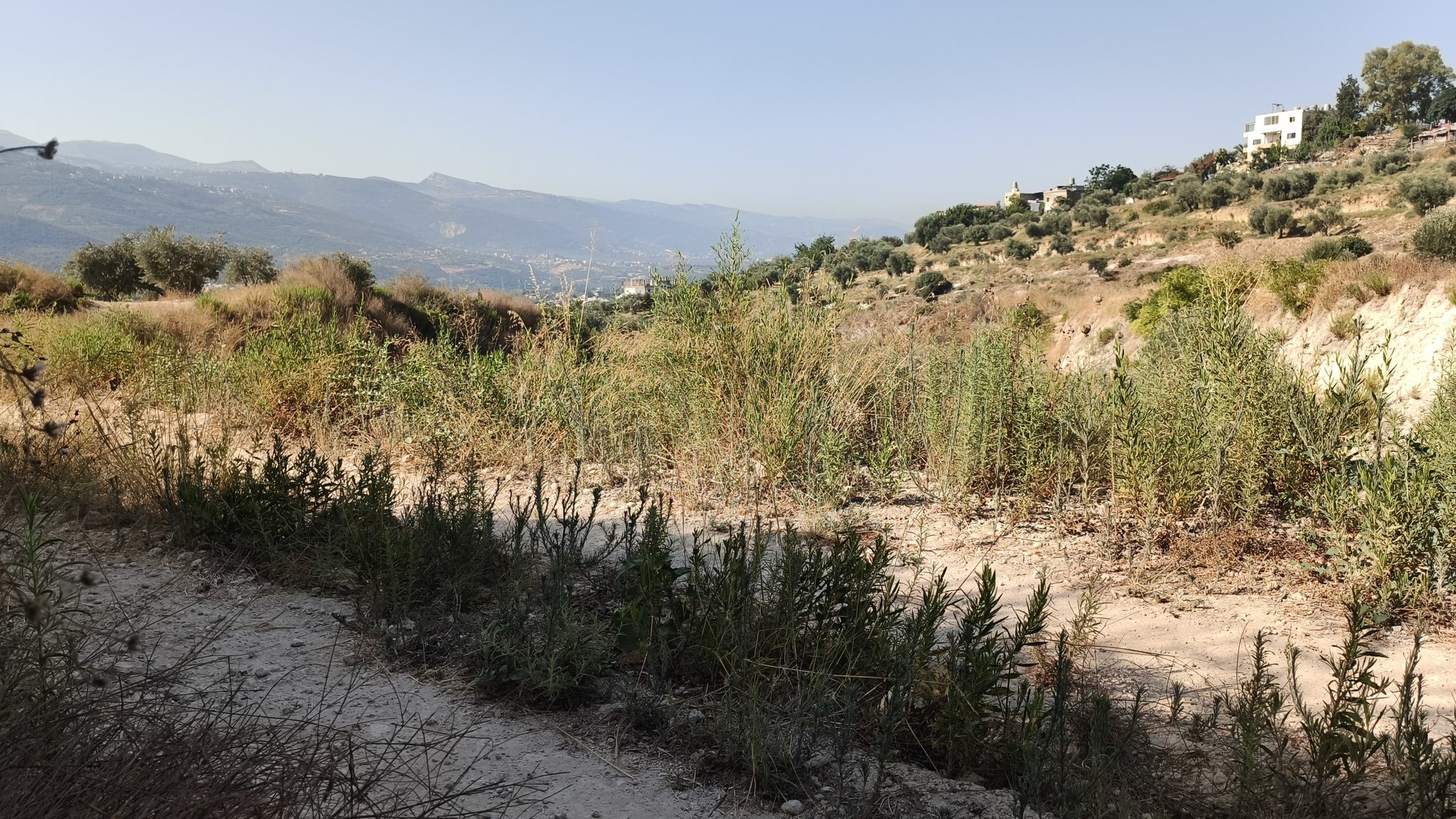
Primary guess
Southern Lebanon
Confidence
• Level: Medium
• Why:
- The landscape—characterized by rolling, terraced hills with olive groves, scrubby vegetation, and a distinct mountainous backdrop—is highly characteristic of the Levant, particularly the terrain of Southern Lebanon or Northern Israel.
- The white-walled architecture with flat or simple roof structures is typical of rural settlements in this specific geographic belt.
- The dry, sun-baked earth in the foreground combined with the specific type of mountain haze suggests a warm, Mediterranean climate common to this region during the summer.
- While similar landscapes exist in parts of Greece or Italy, the specific combination of the rugged, pale-earth terrain, terrace agricultural style, and the architectural "vibe" of the hillside settlement strongly points toward the Levant.
Visual evidence
* **Vegetation:** The presence of olive trees (*Olea europaea*) and dry, Mediterranean scrub/maquis vegetation indicates a climate with hot, dry summers and mild, wet winters.
* **Terrain:** The rolling, terraced hills and the distant, layered mountain ranges are consistent with the topography of the Anti-Lebanon mountains or the hilly regions of the Galilee/Southern Lebanon.
* **Architecture:** A cluster of light-colored (likely white or light-stone) buildings can be seen on the distant hill. This style of building—often concrete or stone with flat roofs—is ubiquitous in Lebanese and Levantine rural villages.
* **Climate/Atmosphere:** The clear, pale blue sky and the "hazy" horizon line are typical of a dry, high-temperature summer day in the Eastern Mediterranean.
* **Soil/Ground:** The light-colored, rocky, and parched earth in the foreground is characteristic of the limestone-heavy soils found in this part of the Middle East.
Reasoning
The visual characteristics of this image strongly align with the Mediterranean interior, specifically the Levant region. The key identifiers are the combination of olive-tree-populated hillsides, the specific pale/limestone earth, and the distinct rural architectural style of the distant dwellings.
* **Why not Europe:** While parts of Greece, Italy, or Spain feature olive trees and hills, the "look" of the soil and the specific architectural style of the distant cluster of houses are less consistent with the typical village aesthetics found in those areas.
* **Why Southern Lebanon/Levant:** This specific landscape is a hallmark of the rural areas stretching from Southern Lebanon down into Northern Israel. The terraced cultivation patterns and the way the villages are perched on hillsides overlooking deep valleys are very common in the geography of the Levant.
Verification
* The climate and terrain match the description of the Mediterranean Levant.
* The architecture and agricultural patterns (olive groves on terraces) are traditional to the region.
Links
• Lebanon Geography (Wikipedia)
Coordinates
Approximate coordinates: 33.2°N, 35.4°E (This area represents the general hilly terrain of Southern Lebanon, though an exact pinpoint is not possible without further identifiable landmarks).