Southern Lebanon, near the border with Israel
2026-08-04 17:23:48
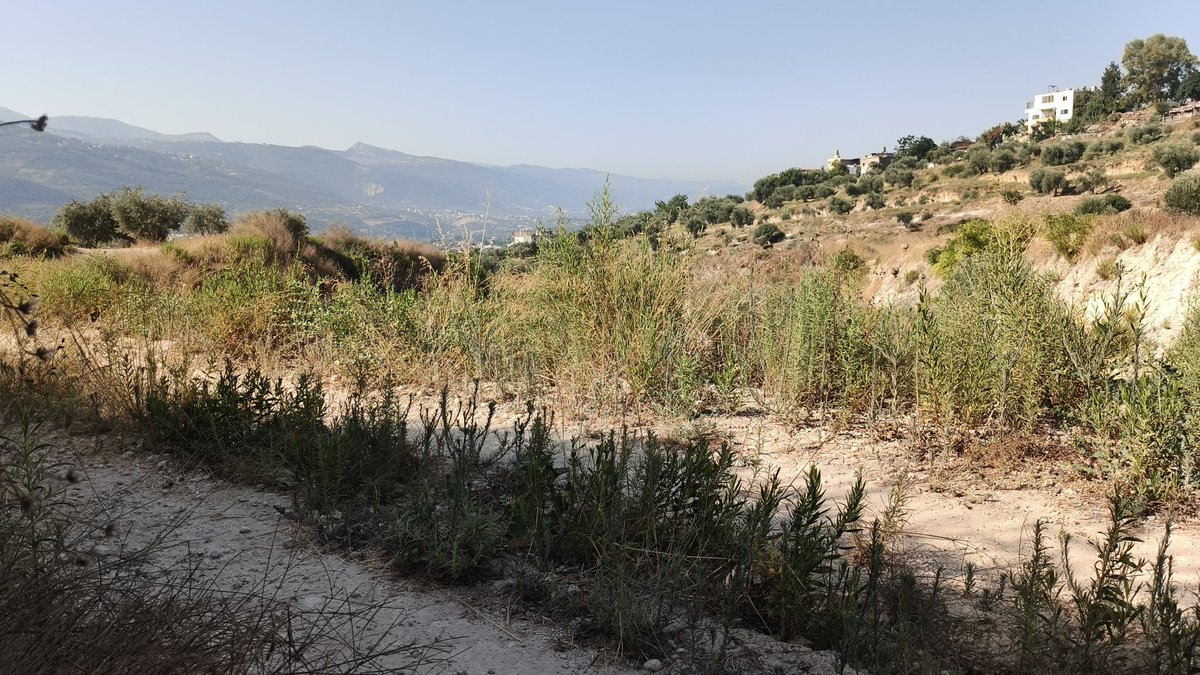
Primary guess
Southern Lebanon, near the border with Israel
Confidence
• Level: Medium
• Why:
- The landscape and topography (mountainous, terraced hills with scrubby vegetation and olive trees) are highly characteristic of the Levant region.
- The specific architectural style of the white residential building on the hill is common in the mountainous villages of Southern Lebanon and similar Mediterranean-Levantine environments.
- The environmental markers—dry, golden grasses, rocky soil, and a clear, high-contrast sky—are consistent with the climate of this region during the summer months.
Visual evidence
* **Topography:** The landscape features rolling, rugged hills and valleys typical of the Anti-Lebanon or southern mountain ranges.
* **Vegetation:** The presence of scattered olive trees (*Olea europaea*) and wild, Mediterranean scrub vegetation (brush and dry grasses) is a hallmark of the rural landscape in the Levant.
* **Architecture:** A lone, modern white building with a flat roof is situated on a hillside. This structure matches the building patterns found in small rural villages in the region, where white stone/plaster houses are built to optimize ventilation and reflect the harsh sun.
* **Climate/Atmosphere:** The clear, bright sky and the dry, sun-baked earth suggest a Mediterranean climate with a significant dry season.
* **Lack of Infrastructure:** The absence of major roads, signage, or urban development in the immediate foreground suggests a rural, semi-arid agricultural area.
Reasoning
The photo depicts a characteristic Levantine rural landscape. The combination of hilly, terraced topography, olive cultivation, and a single, isolated modern residence is representative of the inland mountainous areas of Southern Lebanon. While similar landscapes exist in parts of Northern Israel, Greece, or Jordan, the specific "look" of the scrubland and the architectural style of the building are most strongly associated with the rural southern Lebanese highlands.
Alternative locations, such as the Costa del Sol (Spain) or the Algarve (Portugal), are less likely because those regions typically exhibit more dense coastal tourism development, different vegetation (more pine or eucalyptus), and distinct architectural signatures (e.g., terracotta roofs, specific urban layouts). The landscape here is more rugged and sparsely settled than typical tourist-focused Mediterranean coastal regions.
Verification
* The terrain and vegetation are consistent with the geological and botanical profiles of the **Levantine Corridor**.
* The building style reflects local construction trends in rural Lebanese villages.
Links
• Lebanon Geography (Wikipedia)
• Mediterranean Levant Landscape (General Overview)
Coordinates
Approximate: 33.15°N, 35.45°E (This area represents the general mountainous topography of Southern Lebanon).