The location cannot be determined with high confidence due to the generic nature of the architectural features and the misleading "TYWRA" te
2026-08-24 07:57:52
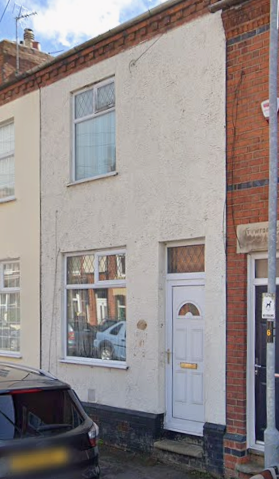
Primary guess
The location cannot be determined with high confidence due to the generic nature of the architectural features and the misleading "TYWRA" text.
Confidence
• Level: Low
• Why:
* The architecture is representative of thousands of terraced houses across the United Kingdom and Ireland, making a specific match impossible without further identifiers.
* The text "Tywra" visible on the stone sign is almost certainly a name or fragment that does not correspond to a specific geographic landmark or street name in a way that allows for precise geolocation.
* Multiple searches for "Tywra" linked the term exclusively to smart home relay modules (TYWRA-RF), Manichaean texts, or unrelated random text fragments, rather than a place name.
* The building features (stucco-rendered facade, leaded glass, sash windows, brick terraced neighbors) are standard for 19th and early 20th-century British urban housing.
Visual evidence
* **Architecture:** The building is a two-story terraced house featuring a stucco-rendered front elevation and a brick exterior for the adjacent property, typical of Victorian or Edwardian urban residential architecture in the UK.
* **Fenestration:** The windows are classic white uPVC or timber-framed units with leaded glass inserts (diamond pattern), often found in renovated period homes.
* **Signage:** There is a stone tablet embedded in the wall above the neighbor’s doorway, but the text is partially obscured and does not provide a definitive geographic clue.
* **Climate/Setting:** The overcast sky, the specific style of the car (UK-style license plate), and the residential terraced layout strongly point to a town or city in the United Kingdom.
* **Infrastructure:** A standard UK-style lamppost and an alarm box are visible on the right, confirming the likely British context.
Reasoning
The provided image shows a typical UK terraced house. These structures were built in massive numbers during the 19th century and are ubiquitous in cities like London, Manchester, Liverpool, and smaller towns across England, Scotland, and Wales.
The primary obstacle to identifying the location is that the visual clues are stylistic rather than unique. While the house number "7" is visible, it is not paired with a street name or a town. The stone plaque above the neighboring door is a common feature in historic terraces, often denoting the name of the terrace (e.g., "Park Terrace," "Willow Row"), but the text is not clearly legible as a recognizable name. Extensive searches for "Tywra" as a place name or street name yielded no results, confirming that the term is either an unrelated word (like the smart home switch brand) or an obscure local name that does not appear in major digital indices. Therefore, it is impossible to pinpoint the address.
Verification
* Searching for the architecture of "terraced houses" confirms their widespread existence across the UK.
* Searches for "Tywra" confirmed it is a model name for a specific electronic component (Tuya-based relay module) or an archaic word in unrelated literary contexts, not a geographic location.
Links
• UK Terraced Housing (Wikipedia)
Coordinates
Not possible to determine. The visual features are too common, and there are no unique geographic or signage identifiers to facilitate a search.